
Categories
Hearing Challenges

Noise Protection Tips For Better Hearing

Rock concerts and jet engines may be the most well-known measurements for sound levels that can damage hearing, but they’re by no means the only loud noises a person could encounter that lead to hearing loss. Everything from lawnmowers and chainsaws to headphones and sporting events can harm your hearing, and when your hearing goes, it goes for good.

Take action to protect your hearing health using these easy, actionable steps that many people may not know about.

1. Use Earplugs or Headphones Around Loud Noises

Many Americans have unavoidably loud workplaces or hobbies, such as people in manufacturing facilities or those who can’t get enough of live concerts. A rule of thumb you can use to find out if you’re in an overly loud environment is if you have to shout to be heard by the person next to you, you’re probably in a dangerous sound environment. In circumstances like these, a simple way to protect your hearing is to physically block the noise from damaging the delicate structures in your inner ear.

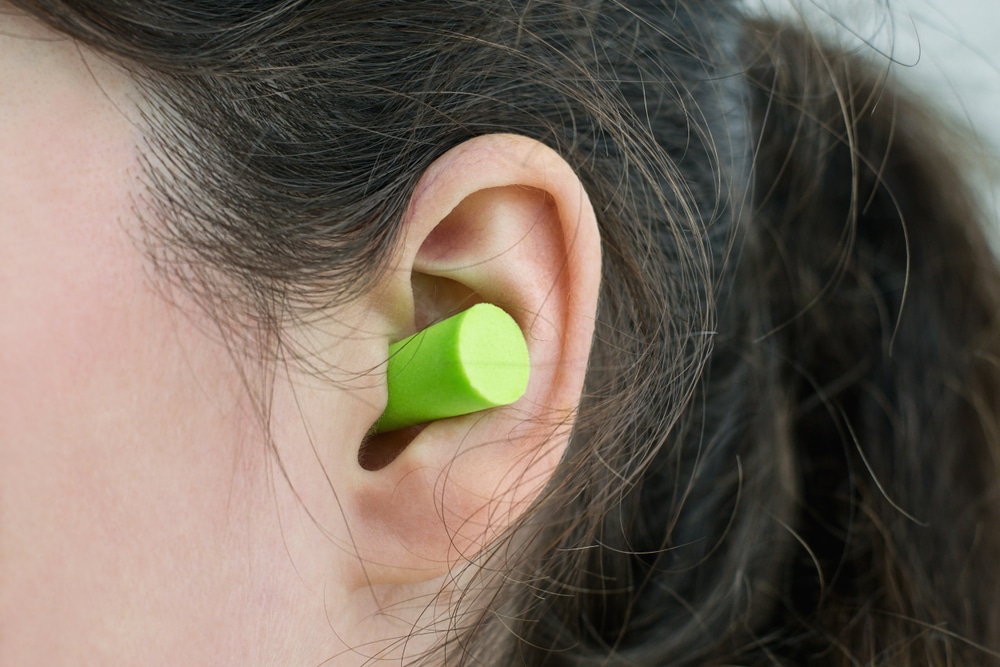
Earplugs are a convenient and widely available solution that can help protect your hearing. There are even custom pairs you can have fitted by our Doctor of Audiology, Dr. Rhee Nesson. Some musicians use specialty earplugs that have filters that allow people to still hear conversations and music clearly while reducing loud sounds’ impact on hearing health.

2. Lower The Volume

The people at risk of hearing loss aren’t just the elderly people normally associated with hearing aids. In fact, it’s estimated that millions of young adults and teenagers are at risk for noise-induced hearing loss due to how they use their headphones and other audio devices. Listening to music at loud volumes for long stretches at a time, whether through earbuds or speakers, can damage your hearing at a young age.

It’s recommended to only listen to music at no more than 60% volume for 60 minutes at a time, taking long breaks in between.

3. Don’t Use Q-Tips

Medical doctors and Audiologists have recommended for years to avoid using Q-Tips to clean out their ear canals. There is no medical reason to do so, as the ears naturally produce earwax to both protect the inner ear from dust and other particles, as well as to clean out the ear canal automatically.

Many people do suffer from excess earwax, but there are other, safer solutions to getting rid of it besides using Q-Tips. Ear wax removal fluids are readily available at the drug store to help soften earwax and let it flow out of the ear on its own. You can also gently clean just inside the canal with a soft, damp towel if needed.

4. Take Time to Recover From Loud Noises

If you know you’ve been exposed to hearing-damaging noise levels, don’t panic that you’re going to lose your hearing. Taking just a few minutes to step away from crowded, noisy bars or events throughout your time there lets your ears rest, helping to avoid doing long-term damage. In addition, after a loud night, research shows that your ears need about 16 hours of quiet to recover to their former function.

5. Keep Ears Dry

Moisture buildup in the ear canal can quickly lead to infection, as frequent swimmers could tell you. Aptly named Swimmer’s Ear and other infections can not only cause discomfort and a feeling of fullness but also damage hearing if not addressed. Fortunately, custom-fit earplugs known as swimmers’ earplugs are highly effective at blocking any water from entering the ear.

6. Manage Stress

A surprising culprit of some hearing conditions, such as tinnitus, is high levels of stress. Stress sends your body into so-called “fight or flight” mode, flooding the bloodstream with adrenaline to help you either fight or run away from a perceived threat. This activation affects everything from your nerves to body heat, and can even cause problems in the inner ear. If you have permanent or temporary tinnitus or ringing in the ears, it could be caused by high stress levels.

7. Stay Active

Exercise has a host of benefits for the body beyond simply building muscle or endurance. Studies have shown it’s also good for mental health, longevity, and, you guessed it, hearing. By encouraging healthy blood flow to all the parts of the body, you can help your ears get the nutrients and resources they need to stay healthy.

8. Get Regular Checkups

Your primary care physician can incorporate quick, simple hearing screenings into your regular physicals if desired, but it’s also important to get regular comprehensive hearing exams with a licensed professional, especially for people at a higher risk for hearing loss. This is because hearing loss develops gradually and is often left undiagnosed until it’s progressed far enough to disrupt a person’s lifestyle. Regular hearing checkups help ensure that we detect any hearing loss early, providing simple, personalized solutions that are right for your habits and budget.

Schedule A Hearing Checkup Today

Did you know that only 1 in 5 people who would benefit from a hearing solution like hearing aids actually uses one? This gap is troubling, especially considering factors such as the fact that hearing loss is demonstrably linked to increased risk of dementia and cognitive decline when not treated.

To find out if you are suffering from some degree of hearing loss, make the commitment of scheduling an appointment with the Hearing Doctors of New Jersey today. Get started by calling our office or contacting us online today.

To learn more about hearing loss and hearing aids, download our FREE Insider’s Guide on how to finally hear better.


Categories
Hearing Loss

Hearing Loss Can Impact Your Cognitive Health

We all know that moderate to severe hearing loss has an effect on a person’s lifestyle and quality of life, but did you also know that it can increase their risk for cognitive impairment? Research points to negative physical, mental, and emotional side effects that increase with the severity of hearing loss. Fortunately, these effects can be halted or even reversed through seeking hearing restoration from a professional hearing aid specialist in New Jersey.

The Link Between Hearing and Our Brain

Hearing loss has both short- and long-term implications for a person’s neurological health, including the development or progression of dementia. In terms of the quality of life, with more severe hearing loss, the more socially isolated a person becomes, leading to a lack of support system that makes them more vulnerable to losing self-agency and becoming stigmatized.

However, it’s important to say that not every single case of hearing loss is guaranteed to cause neurological harm, just that it raises the risk of developing or worsening mental decline significantly. Plus, keep in mind that by treating hearing loss, you can prevent and reduce this risk completely.

In a landmark publication by The Lancet, hearing impairment was determined to be the #1 modifiable risk factor for cognitive decline when identified and addressed in mid-life. And a growing number of studies report a direct correlation between hearing intervention and the stopping (and potential reversal) of cognitive decline.

“Providing hearing aids or other rehabilitative services for hearing impairment much earlier in the course of hearing impairment may stem the worldwide rise of dementia.” 1 

– Journal of the American Geriatrics Society

Why Doing Something Now Matters

Taking action in the management of your hearing loss may delay or slow the advancement of cognitive decline. So don’t wait, get the help you need with a comprehensive hearing test at the Hearing Doctors of New Jersey.

Our proprietary H.E.A.R. MethodTM now includes cognitive screening in addition to a full array of hearing tests and examinations to pinpoint the type and severity of hearing loss, as well as whether you’re at risk for cognitive decline. The Cognivue Thrive screening tool is a personalized way to receive a screening of your overall cognitive and hearing health.

About Cognivue Thrive

Cognivue Thrive is an FDA-cleared cognitive testing device that quickly identifies brain health in three domains: visual, decision-making, and memory. This five-minute test measures processing speed and reaction time to reveal key areas of potential cognitive decline. The Thrive report generated from the test comes with recommendations on how to be proactive in managing identified risk factors or medical conditions, including having a professional hearing aid fitted.

Depending on the results of your baseline Cognivue Thrive test, we may ask you to come to a follow-up appointment to confirm the results or work with you to design a hearing solution that helps restore your hearing and stave off potential cognitive decline.

Hearing Solutions in Livingston, New Jersey

Take action against what’s an easily preventable complication of hearing loss today.

To learn more about hearing loss and hearing aids, download our FREE Insider’s Guide on how to finally hear better.
Sources:

1Livingston G, Sommerlad A, Orgeta V et al. Dementia prevention, intervention, and care. Lancet 2017;390:2673–2734

Categories
Local Services

Hearing Aid Services in Short Hills, NJ

All the residents of Short Hills, NJ have access to our services at Hearing Doctors of New Jersey. We are only a short distance away in Livingston. We offer a variety of services including hearing aids, hearing assessments and evaluations, and even earwax removal. Your Doctor of Audiology will walk you through the treatment process and help you achieve your hearing goals.

Adult Hearing Assessments

When you first come in for an adult hearing assessment, your Doctor of Audiology will discuss your health history, family history, medication, and any injuries or health conditions you have that could affect your hearing and your overall health.

Once we have a complete picture of your health, your doctor will examine your ears for any impactions, obstructions, or damage that is responsible for your hearing loss. And finally, your doctor will perform a hearing test to evaluate your hearing at different frequencies and during conversations. They will also see how your ears react to different levels of pressure.

Once we have a complete picture of your hearing, we will review your results and then build a treatment plan that fits your needs and your goals.

Hearing Aids

Hearing aids are small electronic devices that can be worn to amplify sounds and allow those with a hearing impairment to hear more clearly. Hearing aids are primarily for those who have experienced damage to the sensory cells in the inner ear due to aging, disease, or injury.

Hearing aids can benefit those with hearing impairment in both loud and quiet situations and can assist those with different degrees of hearing loss.

They are typically worn behind the ear or in the ear and provide direct amplification so you can hear the world around you.

There are multiple hearing aid styles and manufacturers. Part of your assessment will determine which style is best for you. Some of the hearing aid styles include:

  • Invisible-in-Canal (IIC)
  • Completely-in-Canal (CIC)
  • In-the-Canal (ITC)
  • In-the-Ear (ITE)
  • Receiver-in-Canal (RIC)
  • Behind-the-Ear (BTE)

As for manufacturers, Hearing Doctors of New Jersey offers quite a few of those as well, including:

  • Oticon
  • Starkey
  • Widex
  • Phonak
  • ReSound

Hearing Aid Repairs & Fittings

Another important aspect of the hearing services we provide at Hearing Doctors of New Jersey is hearing aid repairs and fittings. We want to be sure your hearing aid fits you as comfortably as possible and fitting it to your ear shape ensures that you barely notice that it’s there when you’re wearing it.

As for repairs, with the advanced technology in a hearing aid, sometimes things break or stop working. Luckily, repairs are usually relatively easy and can be done in-house at our office. We can fix your hearing aid and have you on your way.

If the repair is more extensive, it may need to be sent to the manufacturer. If that’s the case, we’ll ensure you’re able to manage your life without it while it’s in for repairs.

Central Auditory Processing Evaluation

Central auditory processing disorder (CAPD) is a condition where the signals and communication between the brain and the ears are not working properly. It makes it difficult for people to concentrate, identify spoken words, multi-task, and remember instructions. It’s primarily found in young children but can be difficult to diagnose because the symptoms are so close to ADD and ADHD.

Luckily, at Hearing Doctors of New Jersey, we take a personalized approach to treatment for CAPD. We will build a treatment plan that is specific to your needs with the help of speech-language pathologists, psychologists, occupational therapists, and school staff.

H.E.A.R. Method Treatment Program

At Hearing Doctors of New Jersey, our proprietary treatment plan is the H.E.A.R. Method Treatment Program. The program offers comprehensive hearing services at an affordable cost. It also ensures that you’re getting ongoing treatment. Not just one appointment. Hearing loss is often degenerative, so you will likely need different treatments as time goes by.

The program includes a comprehensive brain-hearing evaluation, an advanced hearing system, lifetime repairs, a lifetime warranty, and four years of supplies. Additionally, all your testing and office visits will be with your Doctor of Audiology.

About Short Hills, NJ

Short Hills, NJ is only about 12 minutes away from Livingston where Hearing Doctors of New Jersey is located. Short Hills is located in Millburn Township and Essex County. It’s home to The Mall at Short Hills which has a number of luxury brands and exclusive boutiques. The town is also known for its green space, international restaurants, and theater. It’s a great place for commuters looking to travel to New York City for work.

Categories
Hearing Aids

How to Put on Your Receiver-In-Canal Hearing Aid

When it comes to hearing aid performance, there are a variety of factors that can hinder a device from doing its job well. Chief among these is a proper fit.

What are Receiver-In-Canal Hearing Aids?

Receiver-in-canal (RIC) hearing aids are a style of hearing aid design that is characterized by a sound processing unit that sits behind the ear connected to a thin earpiece that is placed inside the ear canal. Unlike behind-the-ear styles, this connection is made with a wire as opposed to hollow tubing.

RIC hearing aids offer both an easily concealable profile as well as high-powered benefits like Bluetooth connection and rechargeable batteries for a highly versatile solution for hearing loss.

How to Put on Your RIC Hearing Aid

Because proper fit is so important to hearing aid function, take some time to really check if your hearing aid is placed correctly, especially if this is your first one or a new style. Performing a visual check helps confirm the feeling of the right fit so you won’t need to look every single time once you get used to it.

Get a mirror. Being able to see what you’re doing and how the hearing aid looks is key to getting the right fit. If you wear glasses, keep them on. If you have long hair, you may find it convenient to tie it back.

Identify right vs. left. Nearly all hearing aids are color-coded to keep track of right vs. left. Typically, the right corresponds with a red indicator and the left with blue.

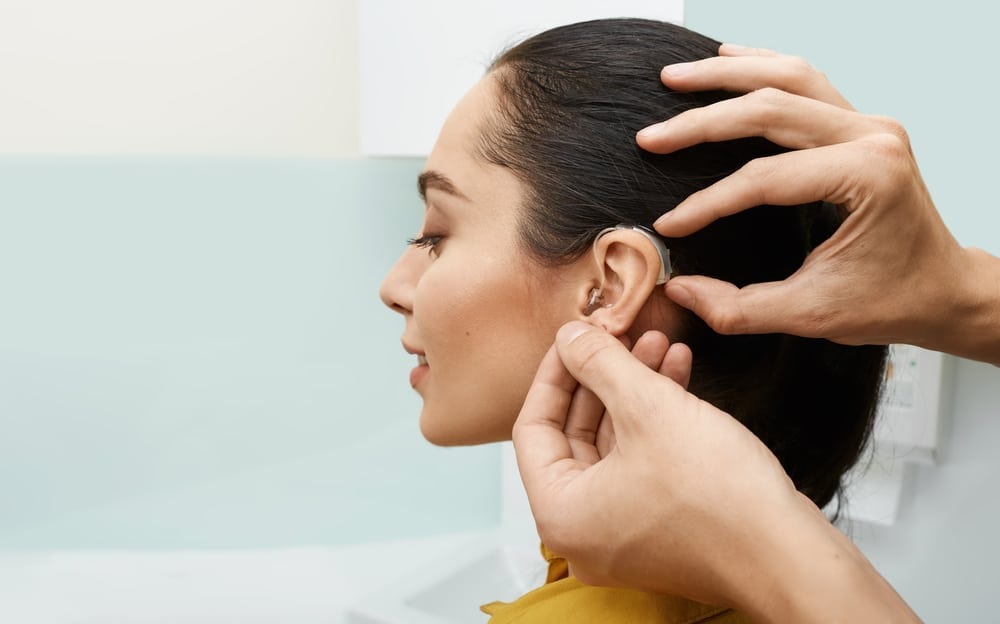
Place the hearing aid body. First, put the body of the hearing aid behind your ear, near the top of it. The cable attached to the ear tip should wrap around the top toward the interior of the ear. For those who wear glasses, place the hearing aids on top of the arms of your glasses.

Insert the ear tip. Push the earpieces into your ear canals until they are flush with the rest of your ear.

Check the fit. With your hearing aids in place, use a mirror to check the fit. Ensure that the body of the device is stable at the top of your ear, the eartip is deep in the ear canal, and the cable lies flat against the side of your head.

Other Hearing Aid Styles

At Hearing Doctors of New Jersey, we offer a full range of professional hearing aids of all styles. With vastly different sets of features, fit, and power, it always helps to have an expert’s opinion on what will work best for your hearing loss and lifestyle. After a comprehensive hearing assessment, our Doctors of Audiology can help you find a solution that’s personalized for your type of hearing loss, including a hearing aid of any style.

Hearing Solutions in Livingston, New Jersey

Still have questions about the proper fit of your RIC hearing aid? Learn more about hearing loss and hearing aids by downloading our FREE Insider’s Guide on how to finally hear better NOW.

Categories
Hearing Aids

Replacing Your Hearing Aid Batteries

If your Receiver-In-The-Canal (RIC) hearing aids use a battery, you’ll have to replace the batteries on a regular basis.

Battery Placement Instructions

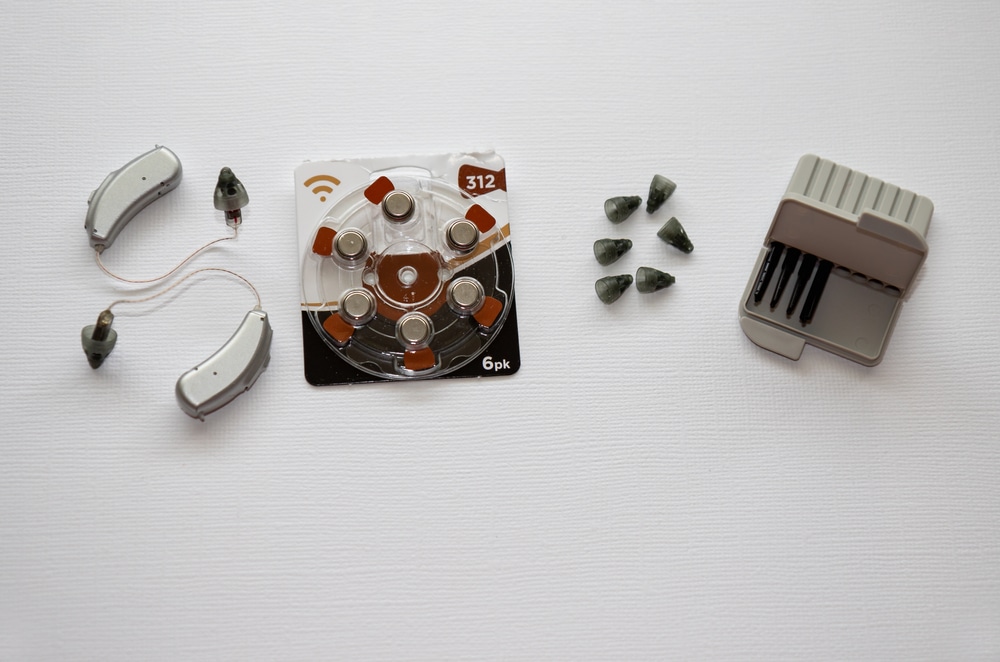
Typically if your hearing aid uses a 312 battery, it will provide approximately 6-10 days of battery life before needing to be replaced. Hearing aids do not have an on/off switch, so to conserve battery life, you should open the battery door to disconnect the circuit when the device is not in use.

When it’s time to change the battery, follow these steps:

  1. Open the battery door at the base of the sound processing unit (if not already opened).

2. Using your fingers or the included magnetized cleaning brush, take out the dead battery from each hearing aid.

3. Place a fresh 312 battery with the removable sticker facing up into the battery slot.

4. Peel off the sticker and close the battery door until you hear a click (if immediate use is needed)

Questions Hearing Aids?

If you are having trouble getting your hearing aids to work, whether due to a dead battery or some other issue, contact an expert at Hearing Doctors of New Jersey. Our Doctors of Audiology are here to help you get the hearing healthcare you need.

Learn more about hearing loss and hearing aids by downloading our FREE Insider’s Guide on how to finally hear better NOW.

Categories
Hearing Aids

How To Pair Hearing Aids To Your iPhone

With increasingly more hearing aids offering advanced features that can be accessed via Bluetooth wireless technology, more people are struggling to connect and access these features, leading to sub-optimal hearing and no access to things like customized presets. Here, we’ll walk through the steps of pairing hearing aids to your iPhone for the first time with just a few simple taps.

Pairing Hearing Aids to Apple iPhone

Before you get started, make sure your hearing aids are off by either opening the battery door or placing them on the charger.

Turn on Bluetooth

First, ensure no other devices have connected to your iPhone by turning off Bluetooth temporarily. Tap Settings, then Bluetooth, then tap the green slider to turn Bluetooth off. You’ll turn it back on when you’re within the Hearing Devices window.

Pair With Made for iPhone Hearing Aids

If you’re in Bluetooth settings still, tap Back to go back to all settings. Tap Accessibility, which you may need to scroll down to see. In Accessibility, tap Hearing Devices to enter hearing aid settings for Made for iPhone hearing aids. Next, turn on your hearing aids by either closing the battery door or taking them off the charger.

Once you have done that, check that Bluetooth is off; tap the switch to turn it on and begin searching for your hearing aids.

When it has found your hearing aids, your name will appear on the screen in Black.  Press on your name which will take you to another screen.  A window will pop up asking, “do you want to pair?”  Select Yes.  If you have two hearing aids, it will prompt you to pair twice.  Once the hearing aids are connected you will notice that your name is now in Blue.  

iPhone Hearing Aid Troubleshooting

If this guide doesn’t help you pair your hearing aids successfully, don’t hesitate to contact the experts at The Hearing Doctors of New Jersey, who can help you troubleshoot any problems you may be having with Bluetooth-enabled hearing aids. You can get in touch with us by calling our office or contacting us online.

Categories
Hearing Challenges

How to Convince Your Loved One To Get A Hearing Aid

There are many reasons and excuses for why your loved one is not getting the help they need with their hearing loss.  Whether it’s a prohibitive price, denying they even have a problem, or, sadly, societal stigma about wearing hearing aids, there’s a lot working against people who need hearing help.

At Hearing Doctors of New Jersey, we know it can be hard to have “the talk” with your friend or loved one, so we want to give you insider tips to help get them started hearing better.

Who’s Not Wearing Hearing Aids

In a remarkable study published in 2013, the International Journal of Audiology revealed that about 80% of adults between the ages of 55 and 74 could benefit from a hearing aid, but don’t use one. This includes hearing loss to all degrees, and it’s important to understand why this is happening.

First, the stigma of wearing a hearing aid can make someone more reluctant to reveal they have hearing loss. Others with mild hearing loss may be in denial that they have a problem and would benefit from getting a hearing test and investigating hearing solutions. Finally, hearing aids can be expensive for some people, with the average cost coming to around $2,300.

Convincing Others to Seek Help

It’s been shown that people who get the hearing solution that’s right for them enjoy a huge improvement in life experience, allowing them to socialize like normal, enjoy concerts and movies again, and many psychological benefits as well. That’s why we believe it’s important to speak candidly but respectfully with the people in your life who could benefit from a hearing aid but don’t want one. Here are our tips for convincing them to go to an audiologist.

Keep it Cool

Sometimes, it’s all about timing. Find a time when both you and your loved one are not stressed, have free time to talk and be in a generally positive mood. Be aware that your mood and conversation skills will have a lot to do with your loved one’s impression of the subject, so reassure them that you’re bringing it up for their best interests, not your own. If at any time one of you becomes agitated and negative, have the courage to end the conversation.

Come Prepared With Facts

There are many well-researched studies that prove the benefits of hearing aids, including their role in reducing the risk of cognitive decline. In addition to these benefits, research some potential hearing aids and have their features ready to cite, like Bluetooth connectivity, fitness tracking, and even translation technology. In recent years, hearing aids have become sleeker, more advanced, and more discreet, meaning there’s no better time to look at a variety of feature-packed hearing devices.

Offer Personal Support

For those who may be in denial about their hearing loss, or who don’t notice its effect on the people around them, bringing personal details can often be a convincing factor in the hearing aid decision. Record things like how many times people have needed to repeat themselves in conversation and how much louder the TV is when they’re watching compared to others. As you reveal these things, offer your support, like going to the audiologist with them and helping them pick out a specific device.

Hearing Solutions in Livingston, New Jersey

Hearing loss affects not just the person with the condition but also everyone around them.  If you have a loved one struggling to hear, now is the time to get them the help they need.

To learn more about hearing loss and hearing aids, download our FREE Insider’s Guide on how to finally hear better NOW.

Categories
Hearing Challenges

Earwax and Ear Health Guide

Attempting to remove earwax with cotton swabs is incredibly common, but this method is actually ineffective and dangerous to your health. Most patients don’t actually have to worry about removing earwax, but in some cases, a blockage can affect your hearing. Continue reading to learn more about earwax and how to safely remove it.

What is Earwax?

The ears are designed to be self-cleaning, and earwax is part of this process. Earwax is a mix of dead skin cells, oils, and other debris that is intended to naturally move out of the ear over time. It helps to prevent infection, stop dirt or other debris from reaching deep into the ear canal, and provide lubrication that protects the ear canal from scratches. While it may seem like earwax needs to be removed, it is actually healthy to have some earwax present. Otherwise, the ears could become dry, itchy, and prone to infection.

Why Does Earwax Build Up?

Why having some earwax within the ear is important, it is possible to experience a buildup of wax that can block the ear canal, resulting in some hearing loss. You may also feel a sensation of the ears being plugged, similar to if you have water stuck in your ear or are wearing earplugs.

There are several reasons why earwax can build up. Some people have naturally dry earwax, which is especially common in older adults. This can make it more difficult for the wax to naturally move out of the ear. Excess ear hair can also trap earwax and cause a buildup. Patients who have had certain surgeries may also experience build-up due to a change in the anatomy or shape of the ear canal. Finally, wearing hearing aids or even some earbuds may cause earwax buildup. This is more common for hearing aid users but can affect those who wear earbuds for up to 10-12 hours per day—if you find this problem, it can be helpful to switch to over-ear headphones instead.

Are Q-Tips Dangerous To Use In Your Ears?

Q-tips can be dangerous to use within the ears for several reasons. Primarily, cotton swabs are long enough to reach the eardrum, meaning that inserting it far into your ear can significantly damage your hearing. Furthermore, Q-tips are not effective in cleaning earwax, and can even push wax and debris further into the ear—sometimes far enough to perforate the eardrum. Some choose to use Q-tips to dry their ears after a shower. Instead, it is safer to use a hairdryer on a low setting to dry the ears.

How Can I Safely Remove Earwax?

A majority of people do not have to worry about removing their earwax, as it will move out of the ear naturally over time. However, removal is sometimes necessary if you experience earwax buildup. Some at-home removal methods that are safe can include mineral oil, baby oil, and over-the-counter earwax softeners. These products can be dropped into the ears to help soften earwax, which can then fall away naturally or be gently flushed out with water. Using any of these three, leave drops in the ears overnight, using a cotton ball to keep the liquid within the ear.

If these at-home options are insufficient, you can also schedule an appointment with an audiologist. They can use several professional methods, including flushing out debris with a saline solution or manually removing earwax, to remove blockages.

Schedule a Consultation

To learn more about your ear health and safely removing earwax, schedule a consultation at Hearing Doctors of New Jersey. Call (973) 577-4100 or contact us online to set up your appointment.

Categories
Hearing Aids

Common Hearing Aid Repairs

At Hearing Doctors of New Jersey, we don’t just help people find hearing solutions that work for their unique experience of hearing loss, we are also their partners in continuing to enjoy a functional lifestyle with ongoing hearing aid service. This includes hearing aid repair, a common need for many people with hearing aids.

When your hearing aid suddenly sounds different or stops working, you may not need to buy a brand new one. The problem you’re having may be one of these common issues with hearing aids that we can help fix.

Battery Issues

Hearing aid batteries, whether single-use or rechargeable, are notoriously finicky and are often the cause of problems with hearing aids. Battery life can vary widely by type of hearing aid, type of battery, and usage habits, which means some batteries die well before you’d expect them to.

In addition, many hearing aids require the battery door to be closed in a specific way, as leaving it open or closing it improperly can fail to complete the circuit needed to power the device.

Our audiologists have the tools and experience to diagnose battery problems and can help you.

Improper Fit

Although it’s not very noticeable, our ears grow and change shape over time. Any change in the interior part of the ear can alter the fit of the device in your ear. An improper fit can cause issues such as feedback or ringing and poor sound quality.

Our audiologists may be able to repair issues of fit with a new mold or other techniques, but in some cases, the hearing aid will need to be replaced.

Tubing Issues

When hearing aids use plastic tubing, they can often suffer from performance issues due to cracking, stretching, or hardening that occurs over time. Often, this degradation results in gradual decline in performance until it becomes noticeable to the user.

While there may be some options for cleaning and fixing hearing aid tubes at home, our audiologists can ensure that the repair job is done right and custom-fit to your ear.

Sound Quality Problems

Sometimes the problem isn’t with anything you can see from the outside of the hearing aid; the electronics and computer chip within the hearing aid can sometimes cause issues of performance. When you experience a sudden change in volume or sound quality, bring it to our audiologists, who can treat the internal components or order a replacement.

Hearing Aid Repair in New Jersey

Not every issue that can arise with hearing aids is correctable, but fortunately, many are. Whenever you notice a distinct change in the performance or quality of sound your hearing aid produces, know that the Hearing Doctors of New Jersey are here to help. At Hearing Doctors of New Jersey, we can help repair your hearing aids. Get in touch with us today by calling or filling out a contact form online.

To learn more about hearing loss, download the FREE Insider’s Guide on how to finally hear better.

Categories
Local Services

Hearing Aid Services in Maplewood, NJ

The residents in Maplewood, NJ can have all their hearing concerns addressed by the Hearing Doctors of New Jersey. At just under 20 minutes away from Maplewood in Livingston, New Jersey, Hearing Doctors of New Jersey provides a comprehensive approach to treatment whether it be assessments, hearing aids, or diagnoses.

Adult Hearing Assessments

During an adult hearing assessment, your Doctor of Audiology will determine if you have any hearing impairment and if so, to what degree. There are lots of causes of hearing loss and this assessment can determine what the issue is and what the right treatment plan is for you.

The test only requires you to listen as best as you can and is completely painless. Your doctor will walk you through each step and then talk over the results with you.

Hearing Aids

If we decide that a hearing aid is the right option for you, we will also help you determine which type of hearing aid works for your specific needs. There are an overwhelming number of types and brands of hearing aids on the market. That’s why our team uses our H.E.A.R Method Treatment Program to help pick the best one for you.

Some of the hearing aid brands we offer at Hearing Doctors of New Jersey include:

  • Oticon
  • Starkey
  • Widex
  • Phonak
  • ReSound

We also offer a variety of hearing aid styles. Which one is for you depends on your hearing needs as well as what you feel most comfortable with. Some of the styles include:

  • Invisible-in-Canal (IIC)
  • Completely-in-Canal (CIC)
  • In-the-Canal (ITC)
  • In-the-Ear (ITE)
  • Receiver-in-Canal (RIC)
  • Behind-the-Ear (BTE)

Hearing Aid Repairs & Fittings

While hearing aids are small, they consist of a ton of high-end technology which means when they need to be repaired, you may need some expert assistance when they are damaged or don’t work properly.

That’s why we offer repairs at our Livingston office. Whether you need a repair or a replacement, we’ll ensure you get the help you need. And if you ever need to be without your hearing aid because it needs extensive repairs, we will provide you with options so you aren’t stuck without it for too long.

Central Auditory Processing Evaluation

For some people, their hearing issues result from the brain and ears not working together properly. This is known as central auditory processing disorder (CAPD) and is most often found in young children. It can show up as having difficulty concentrating, not being able to understand what someone else is saying to you, or inability to remember instructions.

It can also be difficult to diagnose because it often looks similar to ADD and ADHD. But with the help of the audiologists at Hearing Doctors of New Jersey, your child will take multiple tests to determine if they have CAPD or not.

If they do have CAPD, your Doctor of Audiology will create a customized treatment plan in collaboration with speech pathologists, occupational therapists, and psychologists.

More on our H.E.A.R Method Treatment Program

If you’re having any trouble hearing, we can find out the exact issue and a solution using our H.E.A.R Method Treatment Program. H.E.A.R represents our four principles: hearing goals, engagement, analytics, and real results.

The program ensures you aren’t simply coming to the office to get diagnosed and treated and then you never see us again. This method requires continual, ongoing care so as your hearing changes, we are changing your treatment as well.

The H.E.A.R Method Treatment Program ensures you are getting a hearing solution using advanced technology, that your hearing loss, tinnitus, and cognitive needs are all being met, and that your hearing aid is covered with a lifetime warranty.

About Maplewood, NJ

Maplewood, NJ is a township in Essex County and is located in the northeastern part of the state. The township is home to just over 25,000 people and is known for being the birthplace of Ultimate Frisbee. It’s also known for its yearly musical festival and its large number of art galleries, museums, and theaters.