
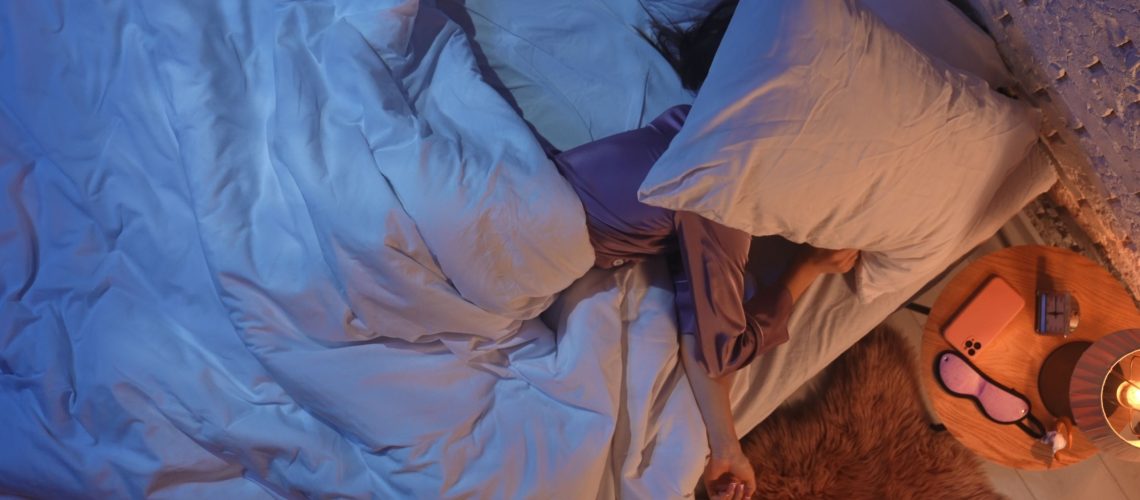
If you live with tinnitus, you already know the feeling: you finally lie down after a long day, the room goes quiet, and suddenly that ringing, buzzing, or hissing in your ears feels louder than ever. For many of our patients in New Jersey, nighttime is the hardest part of living with tinnitus.
The Tinnitus-Sleep Connection
Tinnitus doesn’t just make it hard to fall asleep. Poor sleep actually makes tinnitus worse. It’s a frustrating cycle:
- Tinnitus disrupts your sleep.
- Poor sleep increases your brain’s sensitivity to sound and stress.
- That heightened sensitivity makes tinnitus feel more intense and distressing.
- The distress makes it even harder to sleep the next night.
Research confirms this. Patients who sleep poorly tend to experience tinnitus more intensely. The emotional response is stronger. The distress is higher. Simply put, when you’re exhausted, your ability to cope with tinnitus drops significantly.
Why You Shouldn’t Treat Them Separately
A common question we hear is: “Should I focus on treating my tinnitus first, or my sleep?”
The answer is both, at the same time.
Here’s why: tinnitus habituation (the process of your brain learning to tune out the tinnitus signal) takes weeks or even months. Sleep, on the other hand, can improve much faster with the right changes. When we help patients sleep better early in their treatment, they feel meaningfully better almost immediately. That sense of progress and relief is powerful; it creates momentum that actually supports the longer habituation process.
You’re not choosing between sleep and tinnitus. You’re using better sleep as leverage to make the entire journey easier.
Simple Sleep Tips That Make a Real Difference
You don’t need a complete lifestyle overhaul to start sleeping better. Small, consistent changes can improve sleep within days. Here’s where to start:
Keep Consistent Sleep and Wake Times
Your brain thrives on routine. Going to bed and waking up at the same time every day (even on weekends) helps regulate your internal clock and makes falling asleep easier over time.
Stop Eating Two Hours Before Bed
Eating close to bedtime keeps your digestive system active and can raise your core body temperature, both of which interfere with quality sleep. Give your body time to wind down before you hit the pillow.
No Caffeine After Midday
Caffeine has a half-life of about five to six hours, meaning a 3 p.m. coffee can still be affecting your brain at 9 p.m. For tinnitus sufferers, especially, the added stimulation can make it harder to relax and drift off.
No Nicotine in the Evening
Nicotine is a stimulant. Evening use, whether from cigarettes, vaping, or patches, can disrupt your ability to fall and stay asleep. Cutting it out in the hours before bed can make a noticeable difference.
Get Sunlight Exposure in the Morning
Morning light helps set your circadian rhythm, signaling to your brain that it’s time to be awake now and asleep later. Even 10–15 minutes of natural light in the morning can help you fall asleep more easily at night.
When Sleep Improves, Everything Improves
When our patients start sleeping better, something shifts. Tinnitus doesn’t disappear overnight, but it becomes more manageable. The emotional charge around it softens. Patients feel like they’re making progress and that feeling matters enormously when you’re in the middle of a long habituation journey.
Better sleep means a calmer nervous system, a more resilient emotional state, and a brain that’s far better equipped to tune out intrusive sounds.
A Structured Path Forward: The H.E.A.R. Method™
Sleep hygiene is a powerful starting point, but for many tinnitus sufferers, lasting relief requires a more comprehensive approach. That’s where our proprietary H.E.A.R. Method™ Tinnitus Relief Program comes in.
The H.E.A.R. Method™ is a medically grounded, multi-component program developed by our Doctors of Audiology. It combines advanced prescriptive hearing technology with a clinically proven listening program built by experts who have lived with tinnitus themselves. Rather than offering a one-size-fits-all solution, it addresses tinnitus from multiple angles simultaneously, including the sleep and stress factors that make the condition so disruptive.
The program includes:
- A 7-Step Cognitive Screening & Diagnostic Evaluation — a thorough assessment to understand the full picture of your tinnitus and how it’s affecting your brain and quality of life.
- Advanced Prescriptive Tinnitus Treatment Technology — customized devices that send the proper signals to your brain across the full range of sound situations you encounter, including the quiet of bedtime.
- Tinnitus Cognitive Behavioral Therapy (CBT) — a science-backed approach that directly addresses the thought patterns and emotional responses that amplify tinnitus distress, including the anxiety that disrupts sleep.
- Scientific Verification of Outcomes — ongoing measurement so we can confirm the treatment is working and adjust as needed.
- Annual Comprehensive Evaluations & Yearly Cognitive Screenings — because tinnitus and hearing health are long-term concerns, and ongoing monitoring protects both your hearing and your cognitive health over time.
The H.E.A.R. Method™ is designed to treat tinnitus medically, not just manage it. If you’ve been told there’s nothing you can do about the ringing, we want you to know that isn’t true. With the right structured program, meaningful relief is possible.
Tinnitus Treatment in Livingston & Clifton, NJ
At Hearing Doctors of New Jersey, we take a whole-person approach to tinnitus care. That means we don’t just address the sound; we address the sleep, the stress, and the quality of life factors that make tinnitus feel so overwhelming.
If tinnitus is keeping you up at night, you don’t have to figure this out alone. Our team is here to help you break the cycle and find relief.
Contact us or book an appointment online to schedule a tinnitus evaluation. Because treating tinnitus and sleep together? Both get better.