
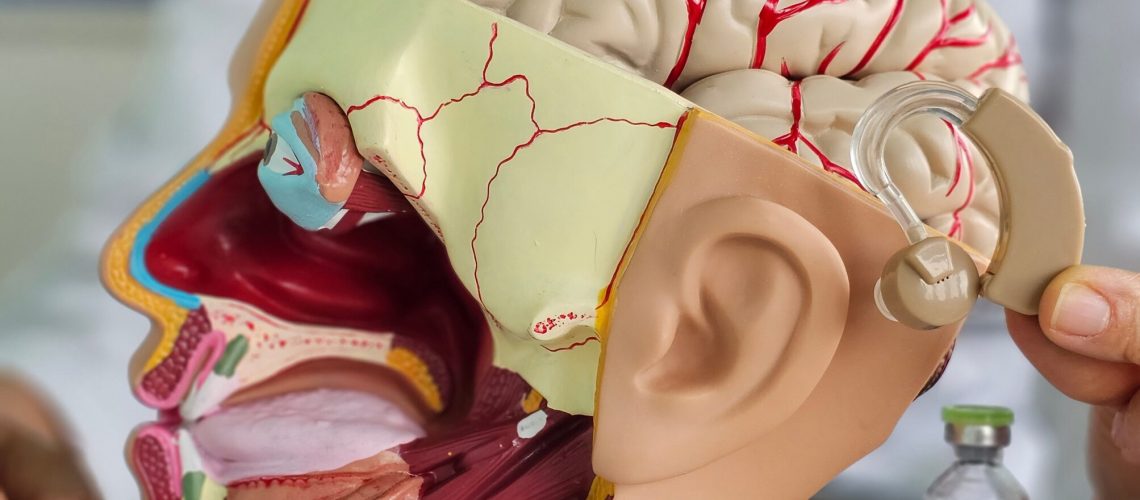
We Don’t Hear With Our Ears Alone
When most people notice changes in their hearing, they assume it’s simply an ear problem.
Maybe conversations seem muffled. Perhaps it’s becoming harder to understand grandchildren, hear in restaurants, or follow dialogue on television. Many people dismiss these changes as “just getting older.”
But hearing is about much more than your ears.
Your ears collect sound. Your brain interprets it.
Every word you understand, every conversation you enjoy, every laugh you share with family requires your brain to process thousands of pieces of sound information every second. Healthy hearing is actually a partnership between your ears and your brain.
That’s why hearing loss is increasingly being recognized as a brain health issue—not just a hearing issue.
The Brain Is Constantly Working to Make Sense of Sound
Imagine trying to complete a jigsaw puzzle when several pieces are missing.
That’s similar to what happens when hearing loss develops.
Your ears may no longer deliver a complete sound signal to your brain. Instead of receiving a clear message, your brain must work harder to fill in the missing information.
Many patients describe it this way:
“I can hear people talking…I just can’t understand what they’re saying.”
This is especially common in noisy environments like restaurants, family gatherings, church services, or community events.
When hearing becomes less clear, your brain has to devote more effort to decoding speech instead of effortlessly understanding conversation.
Researchers often refer to this as listening effort.
Why Listening Effort Matters
Think about how mentally exhausted you feel after spending hours trying to understand difficult conversations.
Many people assume they’re simply tired because they’re getting older.
In reality, your brain may be working overtime just to keep up.
Over time, increased listening effort may contribute to:
- Mental fatigue
- Difficulty concentrating
- Social withdrawal
- Frustration during conversations
- Reduced confidence
- Increased stress
These changes don’t happen overnight.
They often develop gradually, causing many people to avoid social situations because conversations simply become too difficult.
Noise Induced Hearing Loss Affects More Than Communication
For years, hearing loss was viewed primarily as a communication problem.
Today, research suggests the effects may extend much further.
According to peer-reviewed studies summarized in our research guide, untreated hearing loss has been associated with:
- Increased risk of cognitive decline
- Greater risk of dementia
- Changes in brain volume over time
- Social isolation
- Anxiety and depression
- Reduced quality of life
These findings don’t mean hearing loss directly causes dementia. Rather, researchers have identified a significant association between untreated hearing loss and an increased risk of cognitive decline, making hearing health an important part of overall healthy aging.
What the Research Is Showing
Over the past two decades, scientists from leading medical institutions—including Johns Hopkins University, The Lancet, and JAMA—have examined the relationship between hearing loss and brain health.
Among the findings highlighted in our report:
- Hearing loss has been associated with a higher risk of developing dementia.
- Difficulty understanding speech in background noise may help identify individuals at increased risk for future cognitive decline.
- Hearing loss has been identified as one of the leading modifiable risk factors for dementia.
- Studies suggest that treating hearing loss may help slow cognitive decline in some higher-risk adults.
- Early hearing aid use has been associated with lower dementia risk in certain populations.
While researchers continue to study exactly why these relationships exist, the overall message is becoming increasingly clear: hearing health deserves to be part of every conversation about healthy aging.
Why People Wait Too Long
One of the biggest challenges we see is that hearing loss usually develops gradually.
The National Institute on Deafness and Other Communication Disorders is another trusted source for information and financial assistance options.
Unlike sudden vision loss, hearing changes often occur so slowly that people adapt without realizing how much they’re missing.
Common reasons people delay seeking help include:
- “I’m hearing well enough.”
- “Everyone mumbles.”
- “It’s probably just earwax.”
- “I’m not ready for hearing aids.”
- “It’s just part of getting older.”
Earwax is natural and self-cleaning, and you should avoid inserting objects into the ear canal because that can cause damage.
Unfortunately, waiting doesn’t simply affect communication.
The longer hearing loss goes untreated, the longer the brain may receive reduced sound input.
That’s why early evaluation matters. If hearing suddenly disappears, it is a medical emergency.
Establishing a hearing baseline by age 21 is also a smart step.
Hearing Aids and Hearing Care Is Healthcare
At Hearing Doctors of New Jersey, we believe hearing care is about much more than helping people hear louder.
Our goal is helping patients hear more clearly so they can stay connected with family, friends, work, and the activities they enjoy.
A comprehensive evaluation looks beyond whether you can hear tones in a quiet room, and it also helps explain how hearing aids work by showing how microphones pick up sound waves and convert them into electrical signals to improve access to sound, though they do not restore normal hearing.
It also considers:
- How clearly you understand speech
- How you perform in background noise
- Whether tinnitus is affecting your daily life
- Whether additional cognitive screening may be appropriate
- Whether concerns about cost or financial assistance are delaying treatment
Looking at hearing as part of your overall health allows us to better understand what’s happening and recommend personalized treatment options, including different hearing aid styles and other aid styles based on your needs. For some patients, that may mean a behind the ear option, while others may do better with a receiver in the ear design, or canal aids that fit into the ear canal for mild to moderately severe loss and make sounds louder in a comfortable, natural way. Completely-in-canal options are nearly hidden in the ear canal. Directional microphones can also help you focus on sound coming from in front of you in noisy places.
The Benefits of Early Action
The encouraging news is that hearing loss is treatable.
Taking action early may help you:
- Stay engaged in conversations
- Reduce listening fatigue
- Maintain social connections
- Improve communication with loved ones
- Support your overall brain health
- Protect your independence and quality of life
Our goal is helping patients hear more clearly by using devices that pick up sound waves, convert them into electrical signals, and make important sounds louder and clearer. A comprehensive evaluation looks beyond whether you can hear tones in a quiet room. Recommendations may include different styles based on your needs, such as behind-the-ear, receiver in the ear, or open fit hearing aids. That helps identify the best hearing aid for your lifestyle, comfort, and level of loss. Some designs work well for moderate hearing loss, while others are better for severe hearing loss. More powerful options may also be needed for profound hearing loss. In some cases, open styles can help preserve low frequency sounds while improving high frequency sounds. For more complex needs, prescription hearing aids allow a hearing professional to tailor settings more precisely.
You don’t have to wait until hearing becomes a major problem before seeking answers.
When Should You Schedule an Evaluation?
Consider scheduling a comprehensive hearing evaluation if you:
- Frequently ask people to repeat themselves
- Struggle to hear in restaurants or group conversations
- Turn the television up louder than others prefer
- Experience ringing or buzzing in your ears
- Notice family members commenting on your hearing
- Have concerns about memory or cognitive changes
Early answers can provide peace of mind—and, if hearing loss is present, allow you to explore treatment options sooner rather than later. The encouraging news is that hearing loss is treatable, and the best choice depends on the type and severity of loss, lifestyle needs, and whether support is needed in one ear or both. Prescription options can be selected for moderate hearing loss, severe hearing loss, and profound hearing loss, including one hearing aid or two hearing aids when appropriate. Open fit hearing aids are often used when preserving natural low frequency sounds while improving high frequency sounds is important.
The Bottom Line
Healthy hearing is about far more than simply hearing sounds.
It’s about staying connected to the people you love, participating fully in life, and supporting your brain’s ability to process the world around you.
Growing research continues to strengthen the connection between hearing health and brain health. Hearing depends on the external ear and outer ear collecting sound vibrations, the middle ear transmitting them, and the inner ear converting them through hair cells. When those cells are damaged, sensorineural hearing loss may result, and treatment can range from standard devices to a bone anchored hearing aid in selected cases. While hearing loss is only one piece of the puzzle, it’s also one that can often be evaluated and treated.
If you or someone you love has noticed changes in hearing, don’t ignore the signs.
A comprehensive hearing and brain health evaluation can help you better understand what’s happening—and what steps you can take to protect both your hearing and your quality of life. Testing can also help determine whether concerns affect one ear or both. Treatment may involve one hearing aid or two hearing aids depending on the results.
Schedule Your Hearing & Brain Health Evaluation
If you’re experiencing hearing loss, tinnitus, or concerns about cognitive changes, the team at Hearing Doctors of New Jersey is here to help. It’s about staying connected to the people you love, and hearing depends on the outer ear, the middle ear, and the inner ear working together to move sound vibrations through the hearing system. Many cases of sensorineural hearing loss involve damage to inner ear hair cells. Our H.E.A.R. Method™ Treatment Program look beyond hearing alone to assess how well your ears and brain work together, so you can make informed decisions about your long-term health. Hearing loss can be evaluated and treated with personalized recommendations that may include directional microphones, a bone anchored hearing aid, a middle ear implant, or telecoil compatibility with special sound systems called induction loop systems and other induction loop.